Latest News

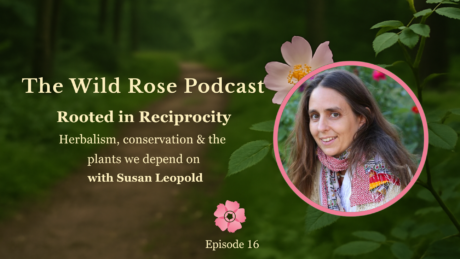
Rooted in Reciprocity: Herbalism, Conservation & the Plants We Depend On

From the Wild Rose Podcast with Dr. Susan Leopold, Executive Director of United Plant Savers
September 2026 Blog (1)

What does it really mean to care for the plants we use?

Herbalism brings us into relationship with plants in a very direct way. We learn about them, grow them, gather them, make medicine with them, and depend on them. But that relationship also raises important questions about where those plants come from, what pressures they may be facing, and what responsibility we have to the ecosystems they belong to.

In the newest episode of the Wild Rose Podcast, our Herbal Village coordinator Megan Kendrick is joined by Dr. Susan Leopold, Executive Director of United Plant Savers, for a wide-ranging conversation about medicinal plant conservation, biodiversity, wildcrafting, habitat loss, invasive species, sourcing, and the many complexities involved in caring for the plants we use.

Rather than approaching conservation as a simple matter of leaving plants untouched, Susan speaks about the importance of relationship, reciprocity, and learning enough about plants to make more informed choices.

September 2026 Blog

Relationship as a Pathway Into Conservation

One of the ideas Susan returns to throughout the conversation is that we tend to care about the things we love and know.

For her, this is part of what makes herbalism an important entry point into conservation. Herbalists already have a reason to pay attention to plants, where they grow, how they are used, and what makes them unique.

United Plant Savers occupies an interesting space in the conservation world because it recognizes that people are already harvesting and using medicinal plants, both personally and as part of a much larger herbal industry.

The question becomes how to participate in those relationships thoughtfully.

What Makes a Plant More Vulnerable?

Not every medicinal plant faces the same risks.

Susan explains that United Plant Savers created its Species At-Risk List to bring attention to medicinal plants that are wild-harvested and experiencing pressure on their populations. Their at-risk tool asks people to consider factors such as abundance, habitat, the part of the plant being harvested, and demand.

The plant’s life cycle matters too. Harvesting flowers or leaves can have a very different impact from harvesting inner bark or roots. Some plants also reproduce or regenerate more easily than others.

Even abundance can be difficult to judge. A plant may appear plentiful in one location while being much less common across its wider range, and a wildcrafter may not know how many other people are harvesting from the same place.

There is no single conservation strategy that applies equally to every plant.

September 2026 Blog (2)

The Larger Pressure of Habitat Loss

Responsible wild harvesting matters, but Susan points to a much larger issue affecting medicinal plants and biodiversity more broadly: habitat loss.

She talks about logging, herbicide use, development, roads, and other changes in land use that can rapidly transform the places where plants grow. The effects extend beyond a single species, affecting the wider relationships between plants, insects, birds, and the ecosystems they are part of.

This is why she places so much importance on protecting intact ecosystems.

Susan also questions the idea that environmental damage can always be addressed simply by planting more trees. She shares an example of a restoration project where native trees were planted but ultimately died because they came from a different bioregion. Over time, birds and natural processes began reforesting the area on their own.

Her point is not that planting trees is always wrong, but that ecological restoration is far more complicated than it can sometimes appear.

The Complicated Question of Invasive Plants

That complexity becomes especially clear when the conversation turns to invasive species.

Susan acknowledges that invasive plants can reduce native biodiversity and alter plant communities, but she also resists framing the issue as simply a battle between good plants and bad plants. In many cases, invasive species move into places that have already been disturbed, and she points out that they may be filling a role within those changing environments even while creating challenges for native plant communities.

The question then becomes not only whether invasive plants should be managed, but how we respond to them.

At the United Plant Savers sanctuary, the organization was once offered funding to restore a riparian area, but the project required repeated herbicide use to control invasive plants. United Plant Savers ultimately declined. For Susan, the experience raised an important question about restoration: what happens when an attempt to repair one part of an ecosystem involves methods that may cause harm elsewhere?

There can also be opportunities for herbalists to work with some invasive plants medicinally. Susan gives Kudzu (Pueraria spp.) as one example, noting that while it can be highly invasive, it also has a history of medicinal use. Looking at these plants through more than one lens does not erase the ecological problems they may cause, but it can open up a more nuanced conversation about how we relate to them.

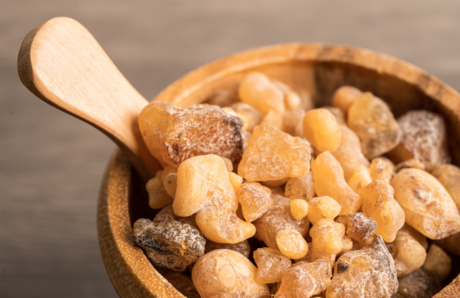
frankincense

Looking Closer at the Plants We Use

Another strong theme in the conversation is bioregionalism.

Susan encourages herbalists to pay more attention to what is growing abundantly around them. Sometimes we learn about a plant from a book and immediately seek it out, while another plant growing nearby may have similar constituents or uses.

Megan reflects on this from her own herbal journey. Early on, plants such as frankincense (Boswellia spp.) and myrrh (Commiphora myrrha) held a particular fascination. Over time, however, one of the plants she came to use most often in her own clinic was something much more familiar: dandelion (Taraxacum officinale).

For herbs we purchase, Susan encourages asking more questions about sourcing:

  • Where did the plant come from?
  • How was it harvested?
  • What part is being used?
  • What communities depend on that plant for their livelihood?

She specifically mentions white sage (Salvia apiana), palo santo (Bursera graveolens), frankincense (Boswellia spp.), and essential oils as areas where it is worth looking more closely at where our plant materials come from.

Wild harvesting itself is not necessarily the problem. Many people rely on it as part of their livelihood. The bigger picture includes plant biology, habitat, economics, sourcing, and our relationships with the places these plants come from.

Reciprocity in Practice

So what can herbalists and plant lovers actually do?

Susan encourages people to learn about United Plant Savers, connect with conservation organizations or native plant societies in their own communities, and make thoughtful choices about the plants they use and purchase.

United Plant Savers also supports a network of Botanical Sanctuaries, which can include backyards, community gardens, school gardens, and other spaces intentionally dedicated to medicinal plant conservation.

Throughout the episode, Susan repeatedly returns to the idea that every plant, habitat, and situation is different. Conservation requires us to pay attention to those differences rather than relying on simple rules.

And perhaps that is one of the strongest connections between conservation and herbalism itself.

Both ask us to look closely.

Listen to the Full Conversation

There is much more in this episode, including Susan’s path into ethnobotany, the work of United Plant Savers, forest farming, medicinal plant propagation, wild harvesting, invasive species, sourcing, and the role herbalists can play in conservation.

You can listen to or watch Rooted in Reciprocity: Herbalism, Conservation & the Plants We Depend On with Susan Leopold on Spotify, Apple Podcasts, or YouTube.

This conversation is especially for herbalists, wildcrafters, gardeners, practitioners, and plant lovers who want to think more deeply about the plants we depend on and the ecosystems they call home.

Recent Posts

Spring Isn’t a Switch: Helping the Body Transition Gently

There’s a cultural expectation that spring arrives like a light switch. One day we’re tired and inward, the next we’re energized, motivated and ready to “detox.” But the body doesn’t work that way. Spring is not an instant awakening. It’s a transition. And for many people, that transition is messy, uncomfortable and misunderstood. The Awkward […]

Heart Medicine in the Dark Season: Emotional & Cardiovascular Support in Winter

Winter draws us inward. The days are shorter, the air is heavier, and for many of us, the heart feels a little more tender this time of year. In herbal medicine, the heart is never just a pump. It is the seat of emotional circulation, connection, rhythm and warmth. In the dark season, when external […]

January at Wild Rose: The Quiet Start to a New Year

At Wild Rose College, we believe winter isn’t a pause in learning, it’s an invitation to go deeper. While the world around us is rushing into resolutions and to-do lists, nature continues to rest. The plants are still holding their energy underground. The light is just beginning to return. And within this quiet, there’s space […]

Pine + Cedar: Forest Medicine for Winter Lungs

In winter, the world goes quiet. Sap retreats into the earth, plants pause their outward growth, and nature invites us to follow her lead; slower mornings, deeper breaths, long exhalations. While many plants die back or rest under snow, the evergreens remain. Pine. Cedar. Spruce. Fir. They stand in their green resilience, not by fighting […]